
A Smarter Way to Reduce Pain After Knee Replacement Surgery
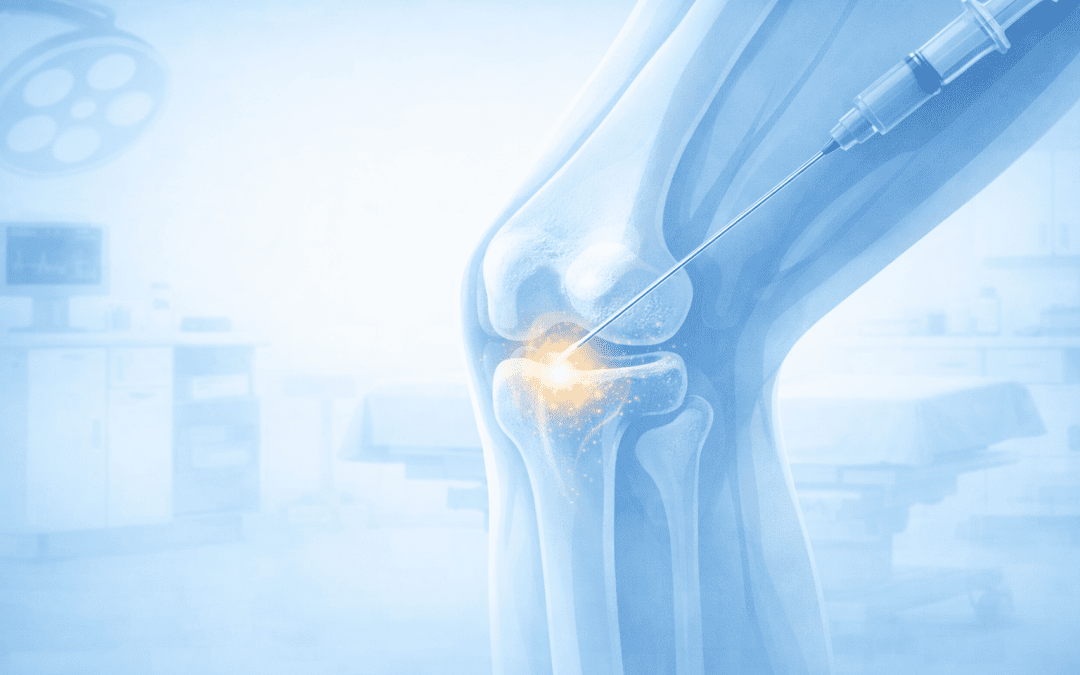
Postoperative pain after total knee arthroplasty (TKA) remains one of the most persistent challenges in orthopedic care.
Despite advances in surgical technique, patients still experience significant pain in the first 24–72 hours following surgery – often leading to increased opioid use, delayed mobility, and reduced satisfaction.
But emerging research is beginning to shift how we think about pain control.
One technique in particular is gaining attention: intraosseous regional administration (IORA).
The insights discussed here are drawn from a recent peer-reviewed study on intraosseous diclofenac in total knee arthroplasty, available on PubMed: https://pubmed.ncbi.nlm.nih.gov/40349862/
What Is Intraosseous Drug Delivery – and Why Does It Matter? 💉
Traditional pain management approaches rely heavily on systemic delivery – typically intravenous (IV) medications that circulate throughout the body.
In contrast, intraosseous delivery introduces medication directly into the bone, closer to the surgical site.
Why this matters:
- Higher local drug concentrations
- Reduced systemic exposure
- Potential for a more targeted and sustained analgesic effect
This concept has already shown promise with antibiotics. Now, research is exploring its application for pain management.
What the Latest Research Shows 📝
A recent randomized, double-blinded controlled trial published in The Journal of Arthroplasty evaluated the use of intraosseous diclofenac compared to traditional IV administration in total knee arthroplasty patients
Study Overview
- 46 patients undergoing primary TKA
- Compared:
- Intraosseous diclofenac (IORA)
- vs Intravenous diclofenac (IV)
- Pain tracked over 7 days
- Additional metrics:
- Opioid consumption
- Mobility
- Sleep quality
- Patient satisfaction
Key Findings From the Study 🔬
1. Significant Reduction in Early Pain
Patients receiving intraosseous diclofenac experienced lower pain scores at:
- 1 hour post-op
- 12 hours post-op
- 24 hours post-op
- Postoperative Day 1
For example:
- At 12 hours: ~18 vs ~36 pain score (VAS)
👉 This is nearly a 50% reduction in perceived pain during the most critical recovery window.
2. Meaningful Decrease in Opioid Use
One of the most important findings:
Patients in the intraosseous group consumed significantly fewer opioids from Day 0 through Day 3.
- Example:
- POD 0: ~20 mg vs ~45 mg morphine equivalents
👉 Clinically, that translates to:
- Fewer opioid doses
- Lower risk of side effects
- Better recovery experience
3. Improved Mobility and Sleep
Pain isn’t just about discomfort – it directly impacts recovery.
The study found that patients receiving intraosseous diclofenac had:
- Better walking ability on Day 1
- Improved sleep quality
- Less pain interference overall
These are critical early indicators of successful rehabilitation.
4. Higher Patient Satisfaction and Early Function
Patients in the intraosseous group also demonstrated:
- Higher quality of recovery scores
- Better early knee function (2 weeks)
- Increased overall satisfaction
Why This Matters for the Future of Orthopedic Care 💙
This study reinforces a broader shift already happening in surgery:
➡️ Moving away from systemic pain management
➡️ Toward localized, targeted delivery
Intraosseous administration offers a compelling advantage:
- Deliver medication where it’s needed most
- Reduce reliance on opioids
- Improve early-stage recovery outcomes
While additional research is still needed to expand its applications, the early data is promising.
The Bigger Picture: Enabling Advanced Delivery Techniques
As techniques like intraosseous administration continue to evolve, they rely on precision access to bone and surgical sites.
This is where instrumentation becomes critical.
At StubMed, we focus on developing tools that support surgeons in accessing and working within bone safely and effectively.
Our Product Ecosystem Includes:
- Bone access instrumentation designed for orthopedic procedures
- Tools intended for clinically appropriate, approved uses
- Solutions that support modern surgical workflows
Note: Product use should always align with approved indications and clinical judgment.
👉 Learn More
If you’re interested in the tools that support modern orthopedic techniques: